
For some 2000 years, Ise Jingu (or Ise Shrine, in English) has been one of Japan’s most important spiritual centres. Many older Japanese folks consider Ise Jingu to be a place of pilgrimage that should be visited at least once in their lifetime, which is what brought us here as my mother-in-law requested to go. Some who can’t make it due to health problems or financial restrictions have been known to send their dog with a friend who was visiting the shrine so that at least one part of their household has been to this sacred spot – and indeed we did see a lot of Shiba Inu dogs with special collars around their neck!
Why is Ise Jingu so special in Japan? In a nutshell, before Buddhism arrived on Japan’s shores the indigenous belief system was Shinto, which translates to ‘the way of the gods’, a worship of sacred spirits that are embedded in the world around us, including mountains, rivers, waterfalls and so on, and of ancestors who become spirits after death. Shinto shrines are the homes of these spirits, and Ise Jingu is the home of the Goddess Amaterasu, the supreme spirit of Japan. Today Buddhism and Shintoism walk hand in hand in modern Japanese spirituality, with people embracing aspects of both religions and often visiting both Buddhist temples and Shinto shrines.
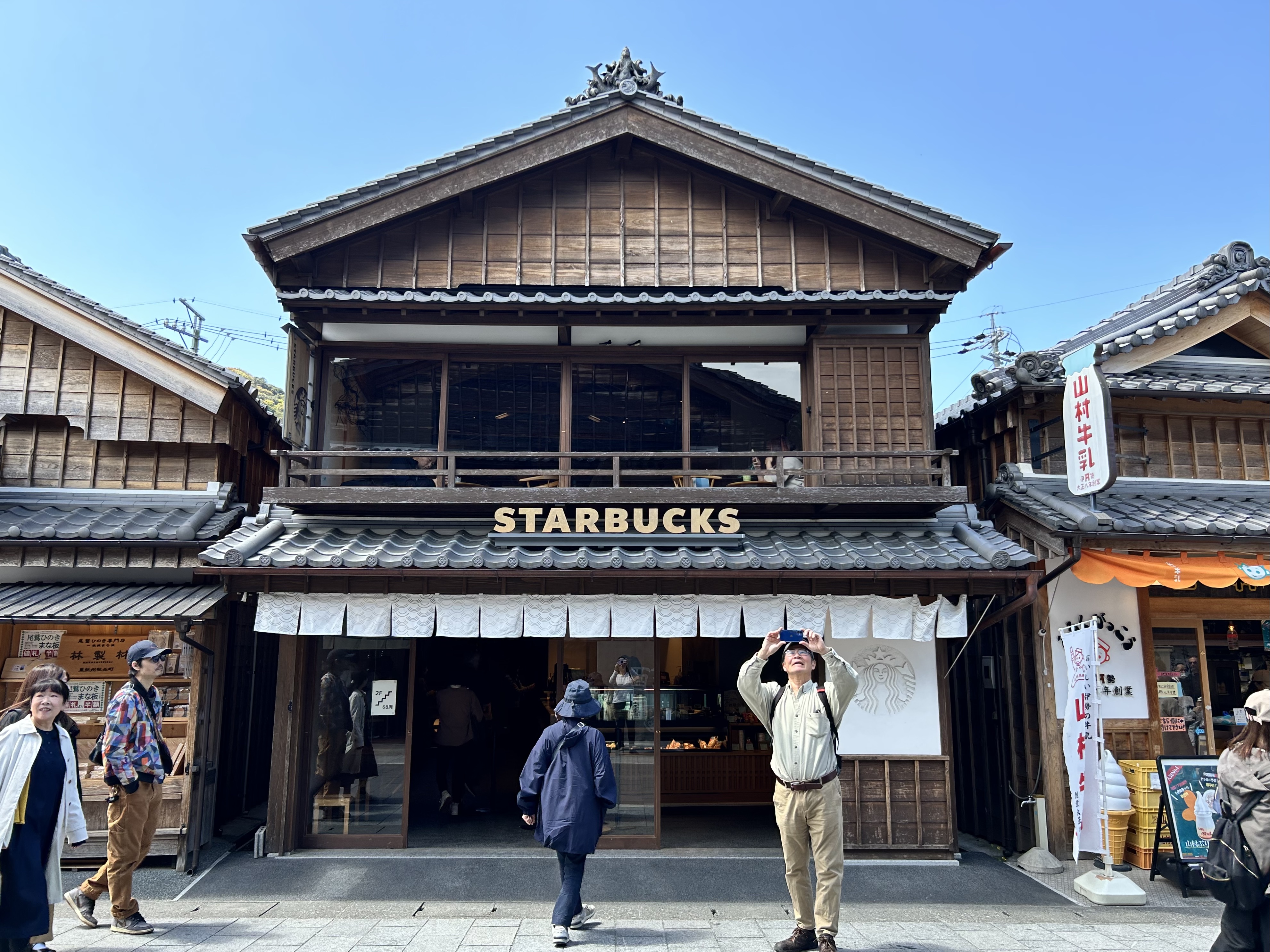
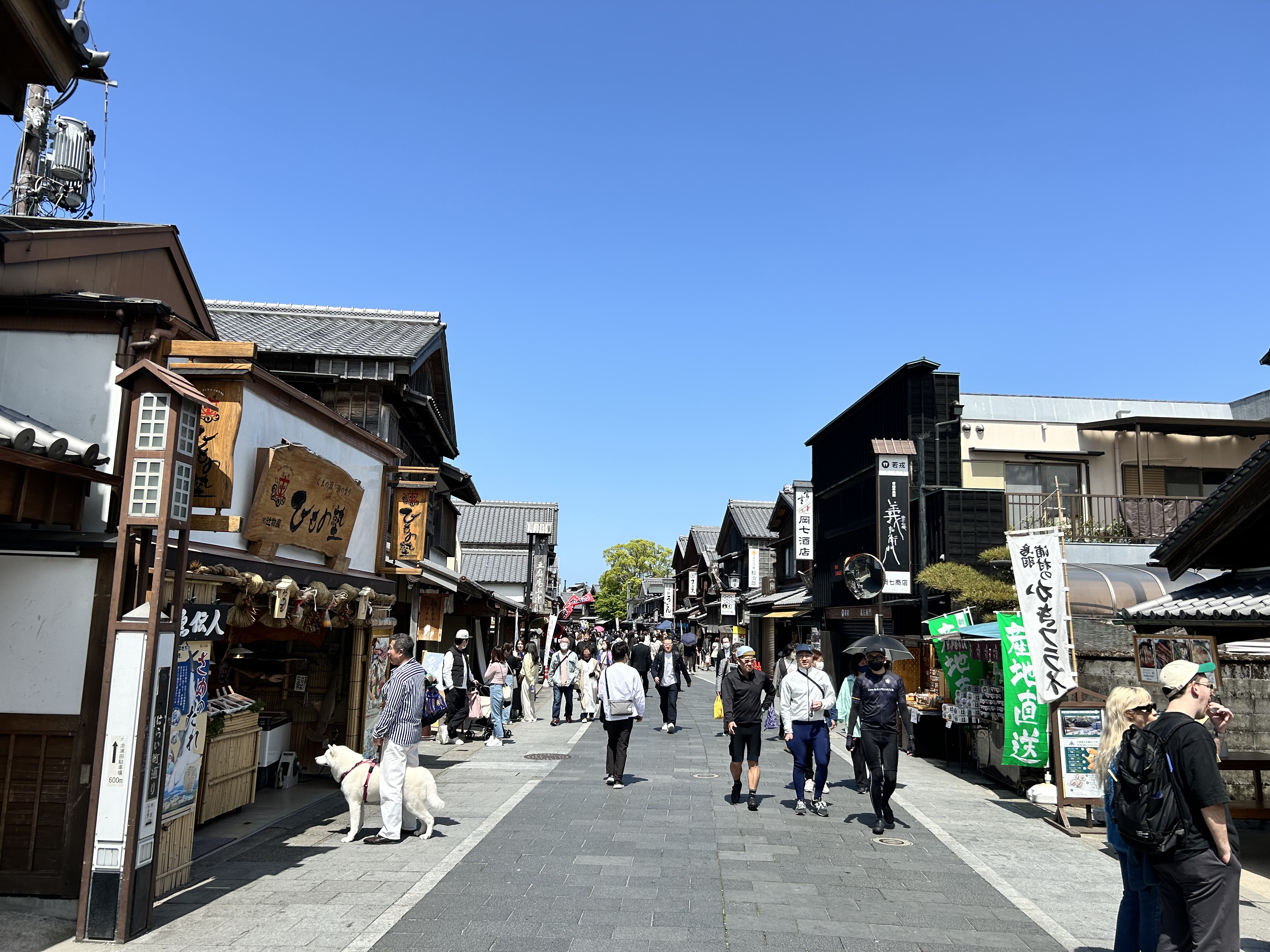
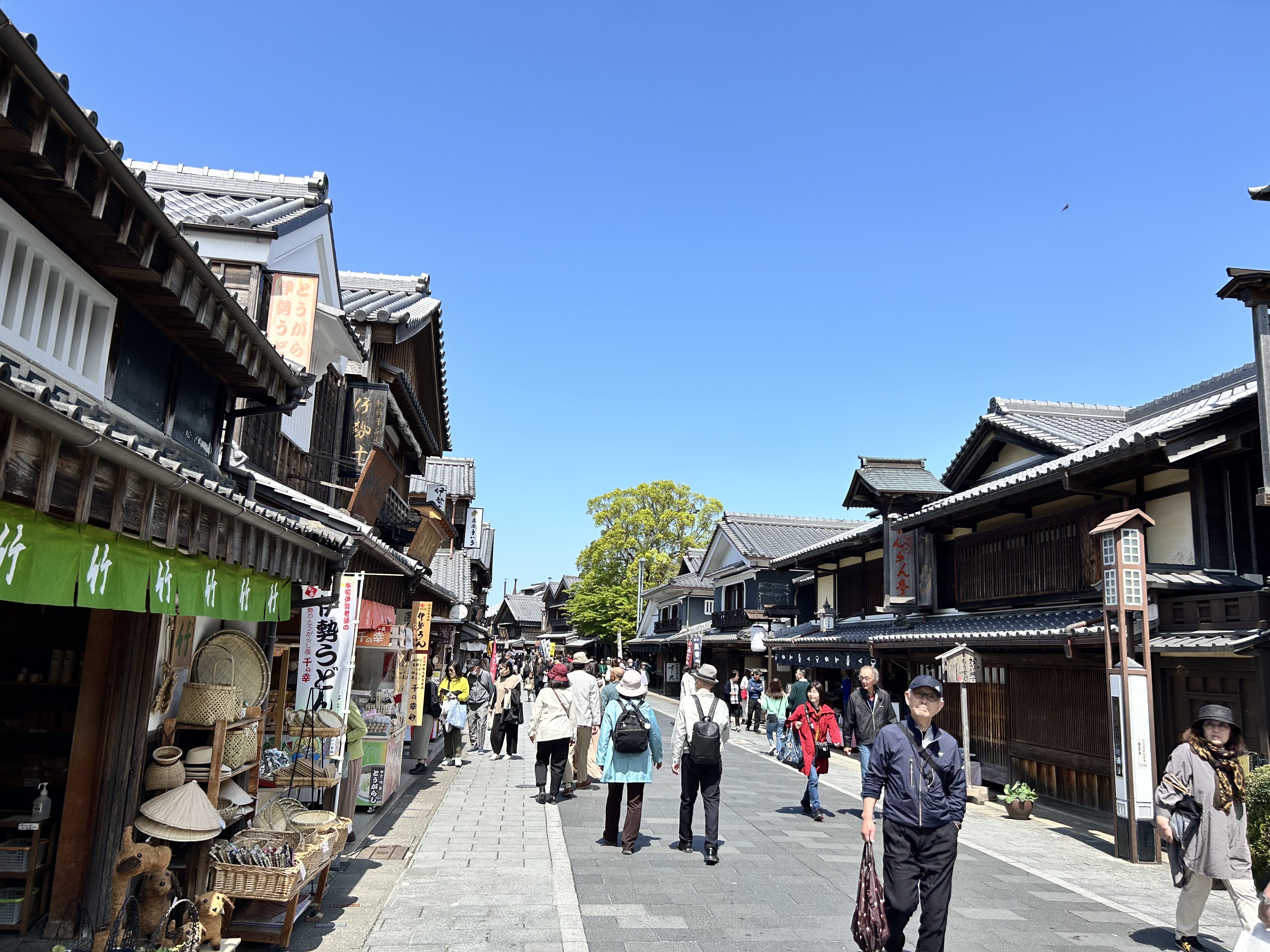
But first! Before getting to Ise Jingu itself we got very sidetracked wandering around in the shopping streets that lead up to the shrine, called Ohairi Machi. This busy pedestrian area is lined with traditionally-styled shops from the Edo period, with loads of food, drinks, snacks, and souvenirs, and a Starbucks!
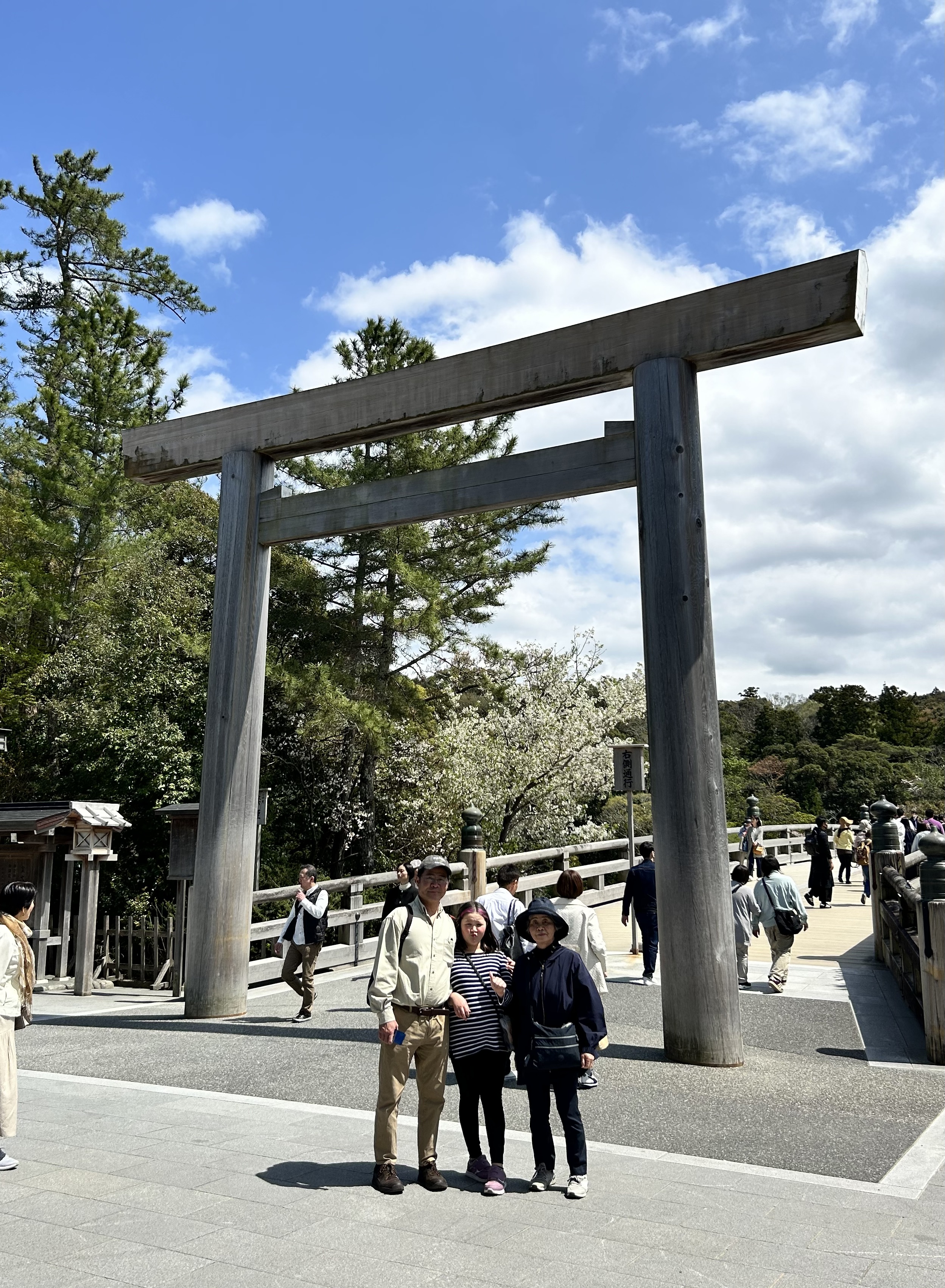
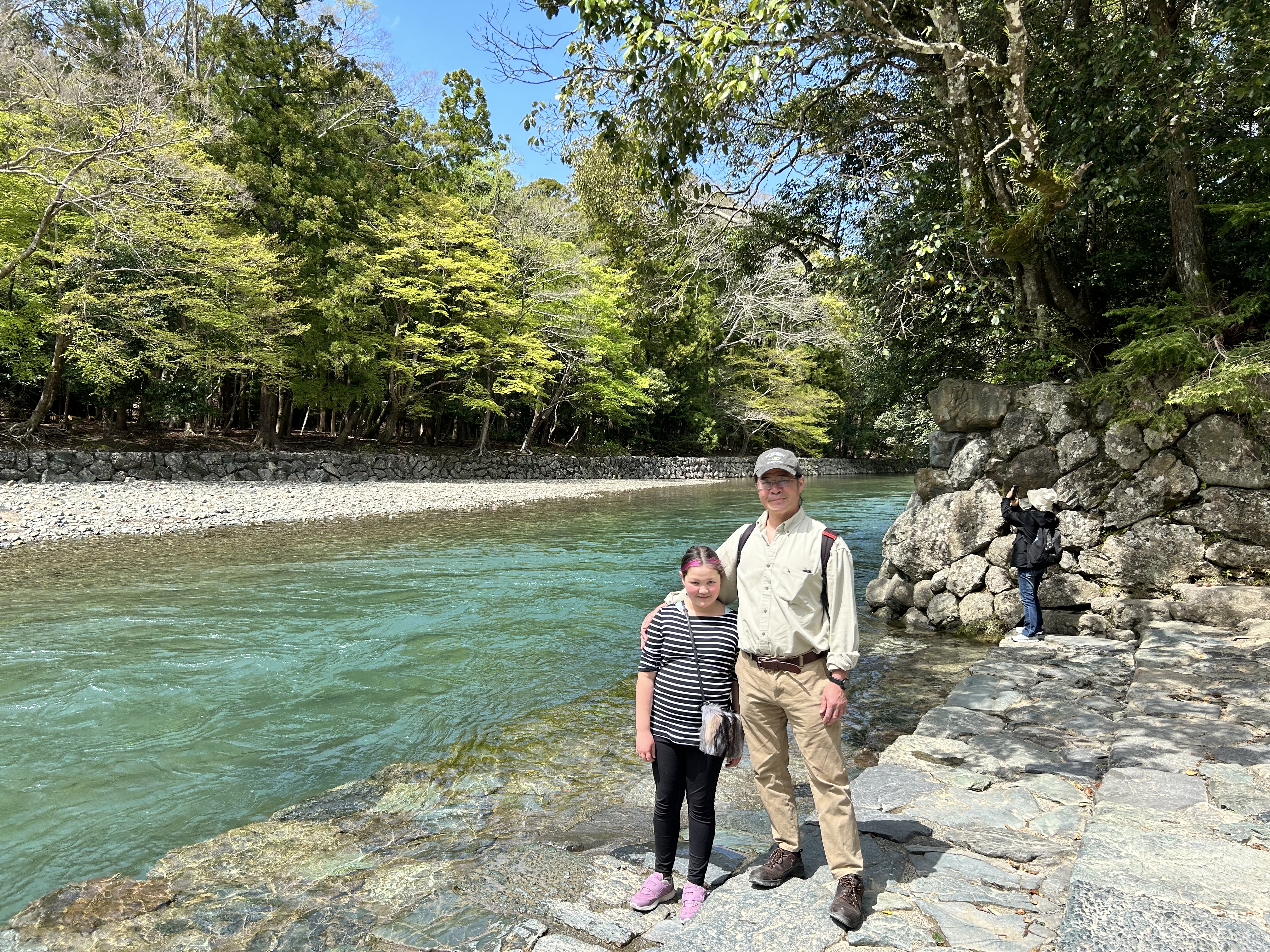
After exploring this area you finally arrive in the forest and follow the footpath to reach the shrine itself. The woods smell incredible, somehow so fresh and clean and pure, or was it all in my head? The river running next to the forest was the most incredible turquoise colour. It was definitely peaceful and serene.

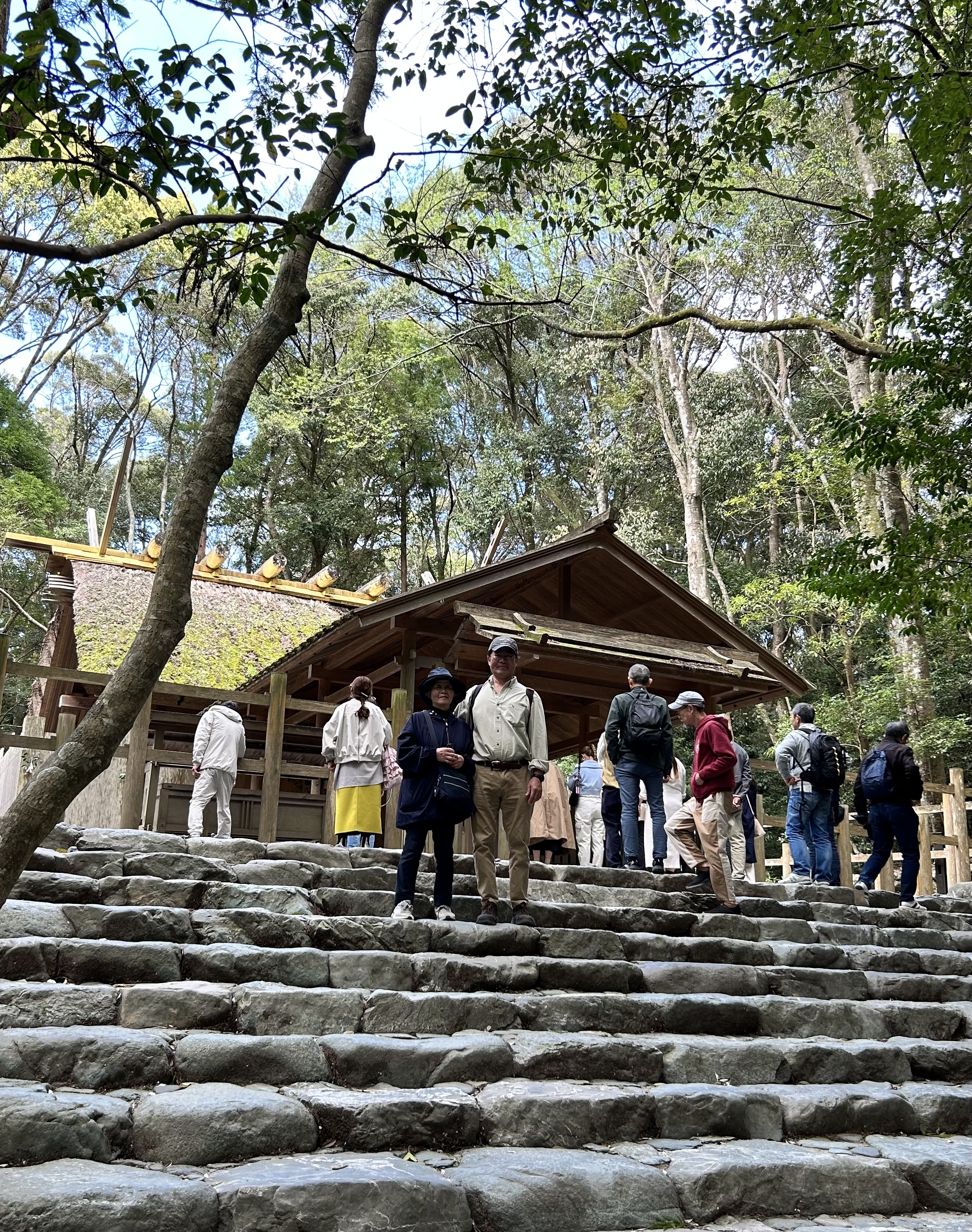
One thing you will notice is that the Ise Jingu is not big and flashy, considering its spiritual significance. On the contrary, it’s quite small and almost surprisingly simple, with the most important buildings and halls constructed with unvarnished cypress wood and traditional thatched roofs. The doorway to the main hall is partly covered by a small curtain, as people should not stare directly inside. They also ask tourists not to take pictures of the inner halls, and you cannot enter the buildings.
As a result some tourists have come away from Ise Jingu somewhat surprised or even disappointed, perhaps hearing that it is an important site and expecting something much more lavish and ornate. But Ise Jingu’s simple appearance on the surface should not be a deterrent; to me it was just one of the many juxtapositions of life in Japan.
 THE TRAVELLING TRINI